

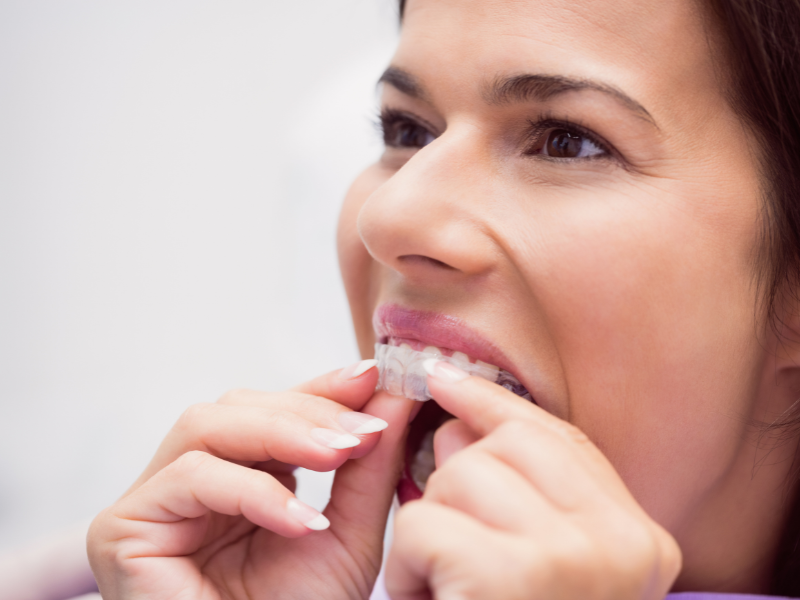
Invisalign is a popular teeth-straightening treatment that works for many people, but it doesn’t fix every dental problem. Understanding what dental problems can Invisalign fix helps you know if this treatment is right for you. Invisalign uses clear plastic trays to gently move your teeth into better positions over time. The good news is that it can solve many common smile problems without the metal wires and brackets of traditional braces.
You should know what Invisalign can and cannot do before committing to any orthodontic treatment. Some dental problems respond incredibly well to the use of Invisalign; others not so much. Your dentist at a dental clinic near you can take a look at your mouth and tell you if Invisalign is a suitable option for you.
Smile Problems That Invisalign Can Fix
Crooked and Crowded Teeth
In most cases, the answer to the popular question “Can Invisalign straighten crooked teeth?” is yes. Invisalign is effective for straightening teeth that overlap or twist. The clear trays gradually reposition your teeth for proper alignment.
When there isn’t enough space in your jaw for all your teeth, teeth become crowded. Invisible braces can fix any teeth misalignment or structure. This results in straightening and enhancing your smile.
Spacing Issues Between Teeth
If you have gaps or spaces between your teeth, Invisalign can close them. Whether you have one large gap or several small spaces, the clear trays work to bring your teeth closer together. This improves both how your smile looks and how your teeth function.
Overbite and Underbite Problems
An overbite happens when your upper front teeth extend too far over your lower teeth. An underbite is the opposite—your lower front teeth stick out past your upper teeth. Many mild to moderate cases of both conditions can be improved with Invisalign in Brampton. Your orthodontist will evaluate how severe your bite problem is to see if Invisalign can help.
Crossbite Issues
A crossbite occurs when some of your upper teeth bite inside your lower teeth instead of outside them. This can happen on one side or both sides of your mouth. Invisalign can often correct mild to moderate crossbite problems by gradually moving your teeth into their proper positions.
Conditions That Invisalign Cannot Treat
Very Severe Bite Problems
Severely crooked teeth or major bite issues usually need more powerful treatment than Invisalign can provide. Traditional braces or even surgery might be necessary for these complex cases. Your dentist can tell you if your condition is too severe for Invisalign.
Extreme Overbites or Underbites
When someone has a very large overbite or underbite, the jaw itself might need adjustment. In these cases, traditional braces or surgery may be the only options. A dental clinic in Brampton can evaluate whether your bite problem falls into this category.
Significant Vertical Issues
Some people’s teeth don’t line up vertically in their mouth. When this problem is severe, Invisalign might not be able to fix it completely. Your teeth might need help from braces or other treatments.
Severe Tooth Rotation
Invisalign may not be able to rotate teeth when they are very twisted. Clear trays rectify minor to moderate rotation issues effectively. If teeth are severely rotated, traditional braces may be needed.
| Condition | Invisalign Works | Why or Why Not |
| Mild crowding | Yes | Clear trays can gradually move and straighten teeth |
| Severe crowding | Maybe | Depends on the amount and location of crowding |
| Small gaps | Yes | Trays can gradually bring teeth together |
| Mild overbite | Yes | Can help with minor bite corrections |
| Severe overbite | No | Braces or other treatment may be needed |
| Mild underbite | Sometimes | Depends on the specific bite and tooth position |
| Severe underbite | No | Often requires more intensive treatment |
| Mild rotation | Yes | Clear trays can gradually rotate some teeth |
| Severe rotation | No | Traditional braces may provide better control |
| Minor crossbite | Yes | Can correct certain mild crossbites |
| Severe crossbite | No | Braces or other treatment may be necessary |
What Makes Someone a Good Candidate for Invisalign
Good candidates for Invisalign have mild to moderate teeth and bite issues. They’re also responsible enough to wear the trays for 20 to 22 hours every day. Invisalign requires discipline because you must remove the trays to eat and drink.
Your age matters too. Invisalign works better for teenagers and adults whose jaw growth has finished. Younger children with growing jaws usually need traditional braces instead.
Finding Out If Invisalign Is Right for You
At Unity Dental Centre, we help patients understand all their orthodontic options. Our experienced team will evaluate your teeth and explain which treatments can give you the smile you want. Whether Invisalign is right for you or you need a different approach, we’re committed to creating a treatment plan that works for your needs and budget. Contact us today to schedule your consultation and discover what’s possible for your smile.
Questions People Ask About Invisalign Treatment
Can Invisalign fix my bite issue, or do I require braces?
Invisalign is effective for mild to moderate bite issues; however, some people need traditional braces or other treatment options.
How do I know if my teeth are too crowded for Invisalign?
Your orthodontist will examine your teeth and determine whether Invisalign can create enough space to straighten them properly.
If Invisalign doesn’t work for me, what are my other options?
Traditional braces, lingual braces, or, in some severe cases, orthodontic surgery may be recommended by your orthodontist.
How long does Invisalign treatment take for mild dental problems?
Mild cases often take 6 to 12 months, while more complex cases might take 18 to 24 months or longer.